
Become more productive with the Flowtime Technique
Alternative to the Pomodoro technique: work in your own flow and take a break at a natural moment.

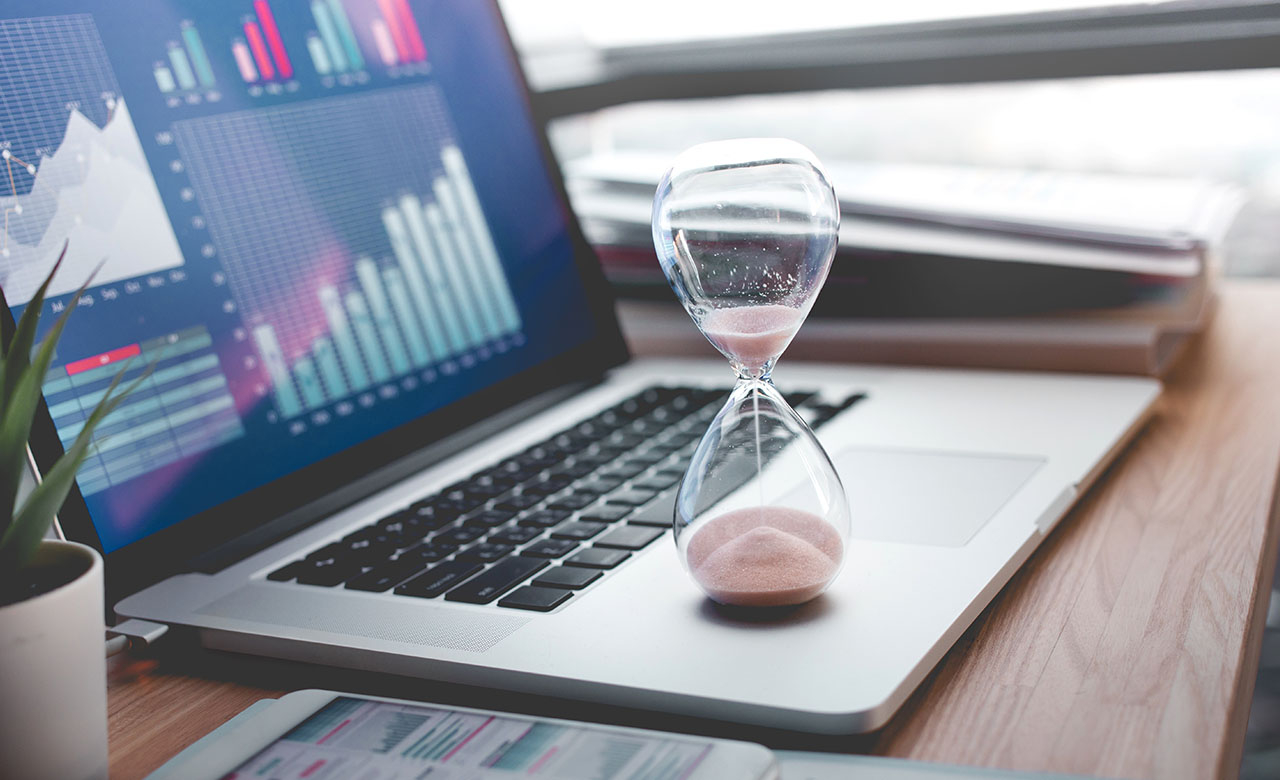
Almost everyone is familiar with the so-called Pomodoro technique. Perhaps from your time management course, or maybe you read about it in one of our previous blogs. It works like this: when studying or working on a task, set a timer for 25 minutes and take a 5-minute break when it goes off. This method of time management brings more structure, prevents you from constantly putting off a difficult task or lesson, and makes you more productive. At least, that’s the idea. Because this method from the 80s (named after the pomodoro, Italian for tomato, which is often used as the shape for a kitchen timer) doesn’t suit every person or every task.
Pomodoro can pull you out of your flow too much
The Pomodoro technique is great for routine tasks or rote learning. But for many complex tasks or creative work, the beeping of the timer disrupts the flow you are in and need too much.
You were just having a brilliant idea, or things were finally clicking after reading complex material. And then… bam, your concentration is gone. That’s frustrating, especially if you don’t really remember what you were working on after the mandatory break. If you then realize that it takes an average of 7 to 15 minutes to fully regain your focus, and you expect to hear that beep again in 25 minutes, it can be incredibly counterproductive. Does this happen to you often? Then consider trying the Flowtime method. It might be a better fit for you or the work you have to do.
What is flow, actually?
You’re probably familiar with the phenomenon of ‘flow’. You become so completely absorbed in what you’re doing that all sense of time disappears. You are super-focused and highly productive. It takes almost no energy to achieve great results.
You generally only reach this mental state when you really enjoy what you are doing, which makes you highly intrinsically motivated.
It feels great to be in such a flow state during work or study. You know you have the skills to reach your goal, you feel completely in sync with what you are doing, and you notice that you achieve much better results than when you have to force yourself to do a chore you dread.
In short: everyone wants to get into a flow state during work or study.
The Flowtime Technique: 'Pomodoro 2.0'
Zoë Read-Bivens came up with the so-called Flowtime Technique as an alternative to the rigid Pomodoro technique. With the Flowtime method, your day is still divided into work periods, but you let go of the system of fixed time blocks and choose to embrace your flow, taking necessary breaks at natural moments. According to Read-Bivens, this is possible because you aren't constantly being interrupted by loud beeping at fixed intervals.
You could perhaps see the Flowtime method as 'Pomodoro 2.0'. Some even call Flowtime ‘Flowmodoro’, because the foundation remains largely the same:
- You track how you spend your time
- You focus on one thing; multitasking is out of the question
- You take the breaks you need
So it’s not that she completely discards the well-known Pomodoro method.
Zoë is also a big fan of taking breaks, because it gets you moving again and refreshes you.
And she also sees the value in creating building blocks to get through the workday or study day. But living and working based on a timer caused her a lot of stress, she indicated in one of her blogs, in which she even speaks of a 'tyrannical timer'.
How does the Flowtime method work?
- Define the task you want to complete. It must be just one, so no multitasking!
- Note the start time when you begin working
- Keep working until you feel tired or distracted
- Note the time when you take a break, that is the end time of your work block
- Resume your work after the break and note the new start time
The duration of the breaks
Averse to overly rigid frameworks, Read-Bivens does not specify how long a break 'should' last, but she does provide some guidelines:
- Work block of <25 minutes: five-minute break
- Work block of 25-50 minutes: eight-minute break
- Work block of 50-90 minutes: ten-minute break
- Work block of > 90 minutes: fifteen-minute break
The pitfall: not taking breaks
Working based on your flow also has its pitfalls: you can get so absorbed in your work that you completely forget to take a break. Yet, taking timely breaks is crucial to prevent burnout or physical complaints. If you notice this happening to you, it is smart to choose smaller tasks rather than that one big end goal.
For example, don't wait until you've finished a large chapter, but stop after every smaller paragraph.
If that doesn't work for you, you might need a firmer hand. In that case, try the 'dictatorship' of the Pomodoro technique again.
Whatever you do, don't work non-stop while your eyes are getting heavy, your shoulders are tense, and your head feels like it's going to explode!
More tips
Of course, breaks and time blocks aren't the only ways to stay healthy and fresh while working or studying. We have shared other tips in this area in previous blogs. Do you need more ideas? Get in touch with us. We’d be happy to take the time to brainstorm (without setting a kitchen timer right away 😉 !)

Keep reading
Get inspired by our other blog posts