
Making e-learning more personal with AI
AI adapts learning material, pace, and recommendations to the learner, provided you continue to ask for feedback yourself.

Organizations often have a clear goal in mind when implementing e-learning. Perhaps it is improving the customer service skills of their employees, strengthening leadership skills, introducing a new type of software, or a different way of communicating.
We weten natuurlijk al lang dat “one size fits all” geen goed idee is. Maar hoe maak je e-learning dan toch persoonlijk, zonder voor iedere afzonderlijke medewerker een aparte e-learning te ontwikkelen? Hoe zorg je ervoor dat de medewerkers zo efficiënt mogelijk leren en je ze zo persoonlijk mogelijk aanspreekt qua interesse en motivatie? Door het aanbieden van differentiatie en personalisering van leren. We geven je enkele voorbeelden van hoe je dit kunt toepassen in e-learning voor de medewerkers binnen jouw organisatie.
Artificial Intelligence
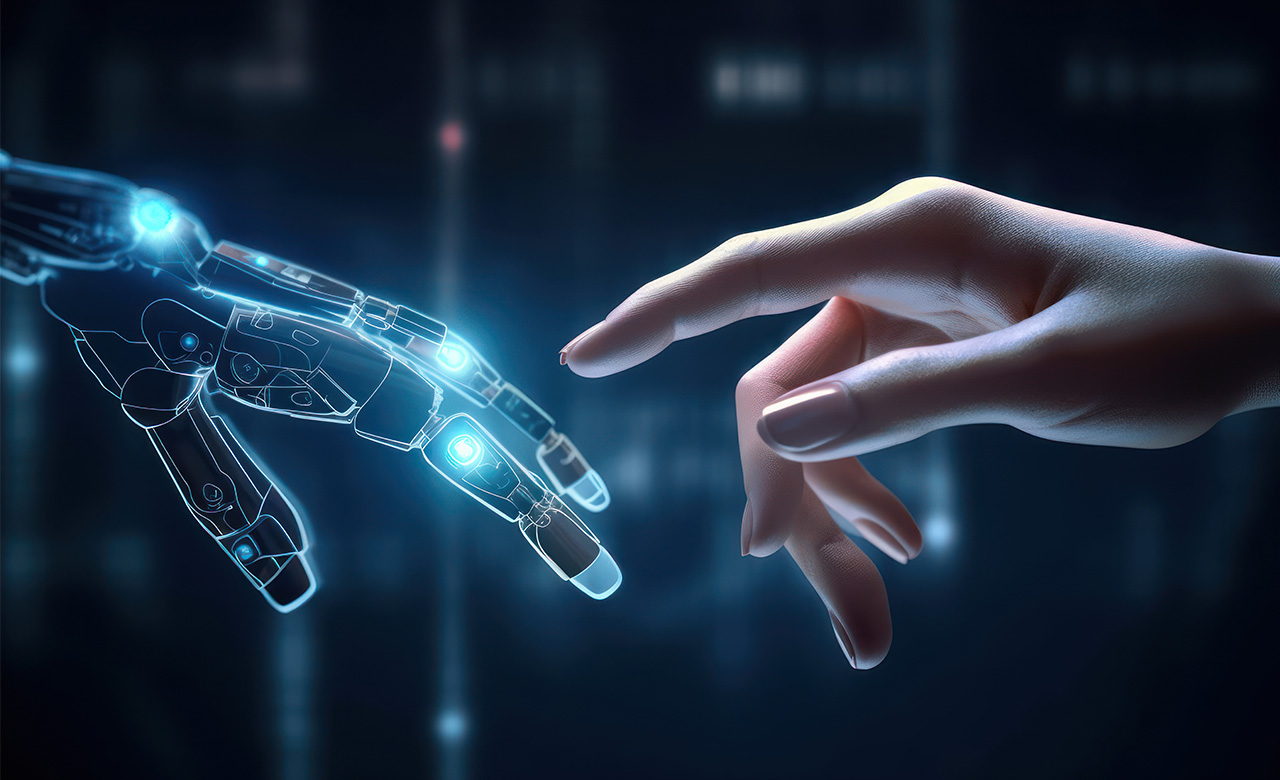
We now have technologies like AI at our disposal that can make e-learning significantly more personal than before. Learning experiences can be adapted to different students, groups, and languages through AI. With the help of AI, you can truly tailor the learning experience to the needs of the student.
This allows you to create learning materials that align with what the student needs, set goals that suit the student, and measure progress.
AI also identifies the student's strengths and weaknesses, providing a clear picture of current performance and areas where improvement is possible.
AI also analyzes the student's behavior and performance, such as which lessons they take and how they perform in quizzes or assignments. With this information, AI can make recommendations for new learning materials that match the student's interests and needs. For example, if a student struggles with a certain topic, AI can offer extra exercises or explanations. AI can also accelerate the learning process if the student is making rapid progress, for example by skipping certain (basic) modules.
1. Differentiate in the learning material
Regardless of whether the employees taking your e-learning prefer to read, listen, or watch, it is a fact that if you present information in a way that most stimulates the brain, the best learning results are achieved. For example: you want to illustrate something in an infographic (which, by the way, you can also create with AI). For some employees, this is sufficient, for instance, if they already have a lot of prior knowledge about the subject.
For employees for whom the subject is new, prior knowledge must first be activated. They may need a bit more background information, a refresher, or context. That is why it is useful to present the information in other ways in addition to an infographic, so that you provide a complete picture.
Take, for example, recording a podcast where you walk through the infographic, adding more detailed text in which all the steps of the infographic are described in depth, or recording a video where you explain each of the components of the infographic in more detail. This may seem redundant, but in this way, you offer a very complete learning experience.
It has been proven that a combination of visual and auditory learning works best; this is also known as "dual coding." With the many possibilities of Pluvo, you can create beautiful learning materials and challenging quizzes.
2. Ask for feedback
The most valuable source of information is, of course, still the employees themselves. Ask them regularly for feedback on their learning experience. This can be done automatically. Just make sure that something is actually done with that feedback afterward.
Artificial Intelligence is, of course, a great tool and can be very effective and useful, but it is important to provide AI with the right information to make it work as optimally as possible.
That is why student feedback is worth its weight in gold. Did AI correctly assess their learning needs? Did it skip the right parts? Did it provide extra information in different ways when the student needed clarification? What did the student like about the e-learning and what not? What was pleasant about the learning experience and what was less so? What can be improved?
3. The power of emotion
It is essential to appeal to the student's emotions. Certain emotions will evoke a sense of recognition in the student, and through this, they immediately make a connection to certain feelings and experiences from the past.
These can be both desired feelings ("yes, I was successful then!") and undesired feelings ("when I applied this technique, I failed miserably"). Recognition is key. From this recognition, the student's intrinsic motivation is tapped into, which in turn encourages them to continue learning with great enthusiasm.
After all, they want to know how they can maintain positive emotions or transform negative ones into positive ones by following the e-learning.
4. Branching scenarios
Adding case studies also makes e-learning a lot more personal.
In case studies, for example, the learner is presented with a specific scenario and then determines the next steps. Each choice leads to a different outcome. This case study works best when the various next steps correspond as closely as possible to daily work practice.
Not every choice needs to lead to a positive result; after all, that wouldn't happen in real life either. The learner can learn what consequences a certain step might have and adjust their decision to see which other outcome is more desirable and what actions precede it.
Pluvo also offers many possibilities to make your e-learning as personal as possible. Curious about how you can switch from a 'general' e-learning to a more personal learning experience for every employee? Contact us!

Keep reading
Get inspired by our other blog posts