
Develop skills with Immersive Learning
VR, AR, and MR immerse employees in simulated situations to practice high-risk tasks safely.

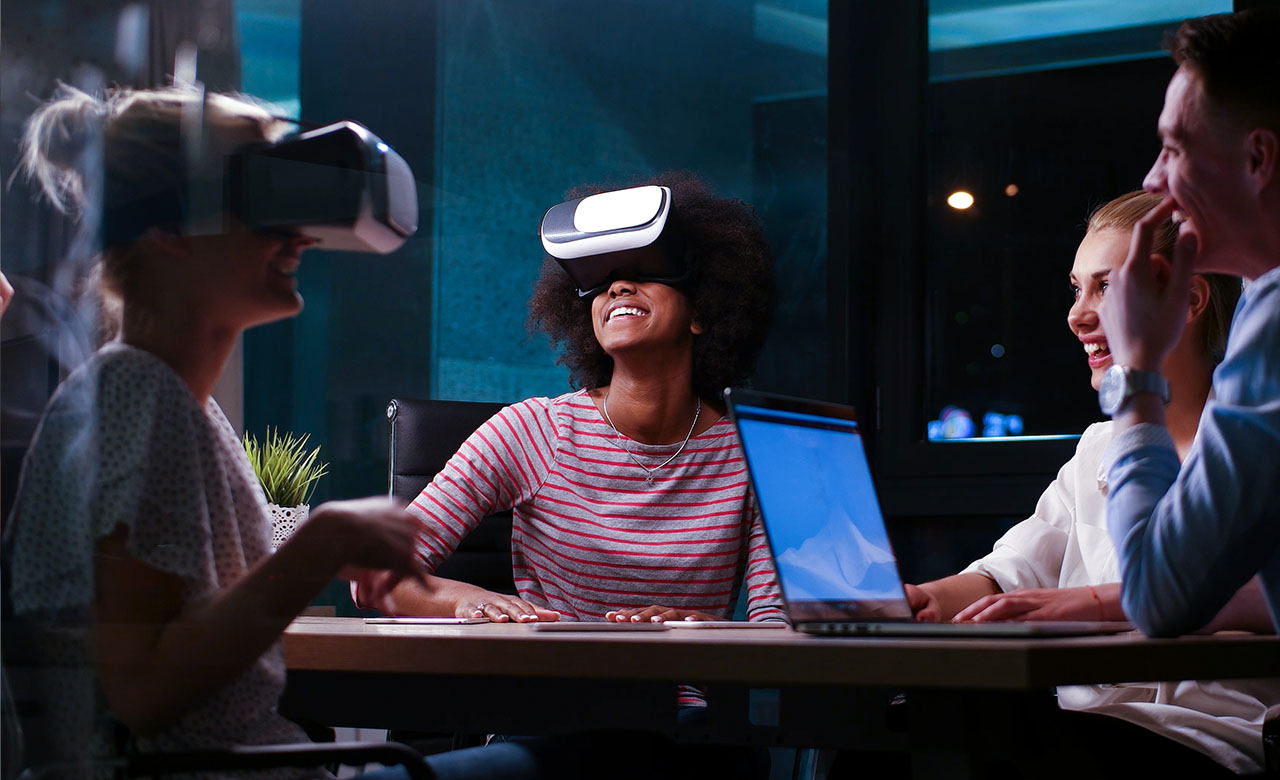
Our world is changing rapidly, and the gap between the skills companies need and what employees can offer is widening. This threatens not only productivity but also organizational growth. It is a challenge for companies to continuously upskill and reskill their employees.
The COVID-19 pandemic has had a major impact on how companies approach employee training. While continuous skill development was previously a smart choice, it has now become an absolute necessity. The need to continuously upskill and reskill employees is forcing organizations to develop a flexible and well-prepared workforce that is ready for the challenges of a rapidly changing market. Learning and Development (L&D) professionals play a crucial role in this. They must re-evaluate existing training materials and processes to stay up-to-date with the latest developments and technologies.
A highly effective method for this is Immersive Learning. Immersive Learning is a training method that fully immerses employees in a simulated or interactive environment. This often makes use of technologies such as Virtual Reality (VR), Augmented Reality (AR) or Mixed Reality (MR).
Wat is Virtual Reality?
Virtual Reality (VR) allows employees to step into a 3D computerized environment. This makes it feel as if they are truly part of a virtual world, such as a workplace, a process, or a specific situation.
Benefits of Virtual Reality
Using VR in e-learning offers many advantages. For instance, it provides employees with an active learning experience rather than just passively receiving information. VR makes it easier to understand complex concepts and theories. Additionally, VR makes learning more fun and creative, even when dealing with dry topics.
It also improves information retention because the information is linked to emotions. Furthermore, it takes relatively little time for employees to grasp complex subjects, which leads to greater enjoyment in learning.
Applications of Virtual Reality
VR offers new learning opportunities that were previously unavailable. Think, for example, of learning how to work in high-risk environments, handling dangerous materials, or performing complex tasks without any actual danger involved.
This provides valuable practical experience without the risks, allowing employees to make mistakes and try again if necessary without dangerous consequences.
Difference between Virtual Reality and Augmented Reality
The difference between VR and Augmented Reality (AR) lies primarily in the user experience and the equipment:
- AR uses the real world as a background, while VR is completely virtual.
- AR users remain active in the real world, while VR users are in a completely virtual world.
- VR requires a headset, while AR is easily accessible via a smartphone.
- AR combines real and virtual elements, while VR takes place entirely within a virtual reality.
Why choose Augmented Reality?
Augmented Reality (AR) is a fast-growing trend. It is expected that there will be 2.4 billion mobile AR users worldwide by 2024. AR is changing how we interact with mobile apps by integrating computer-generated images into the employee's real environment. This allows employees to learn in a more interactive setting.
AR does not replace the entire real world, but adds virtual objects to it. This makes it ideal for simulations where employees can practice with real objects in a realistic setting.
Oefen groots met klein risico
AR is een krachtig hulpmiddel, vooral in risicovolle situaties. Artsen kunnen bijvoorbeeld complexe procedures oefenen zonder patiënten in gevaar te brengen. Medewerkers kunnen in een veilige omgeving met gereedschap oefenen en tegelijkertijd dezelfde stress en werkdruk ervaren als in de echte wereld. Elke beslissing die zij nemen leidt tot een andere uitkomst, wat hen helpt de gevolgen van hun acties te begrijpen en te overzien.
Immersive Learning met VR en AR biedt dus veelbelovende mogelijkheden voor het bij- en omscholen van medewerkers! Het maakt leren niet alleen effectiever en leuker, maar bereidt medewerkers ook beter voor op de praktijk. Bedrijven die voor deze technologieën kiezen, investeren in een toekomstbestendige workforce die klaar is voor de uitdagingen van morgen.
Hiermee versterken organisaties hun concurrentiepositie en passen zij zich aan aan de continu veranderende eisen van de moderne wereld.
Pluvo is erg enthousiast over de mogelijkheden van Immersive Learning. Wat zijn jouw ideeën over Immersive Learning? Stuur ons een bericht via de chat.

Keep reading
Get inspired by our other blog posts